


👋 Hello! My mission with Beyond with Yon is to ignite awareness, inspire dialogue, and drive innovation to tackle humanity's greatest existential challenges. Join me on the journey to unf**ck the future and make transformative ideas happen.
"If you want to change the world, find someone who has the courage to bet on it."
— Richard Kramlich (co-founder of New Enterprise Associates)
This week, the passing of Richard ‘Dick’ Kramlich was announced. Kramlich was a venture capital pioneer whose investments helped shape the technology landscape we take for granted today. As a co-founder of New Enterprise Associates (aka NEA)—one of the largest and most influential VC firms—he backed Apple, 3Com, and Juniper Networks, among others.
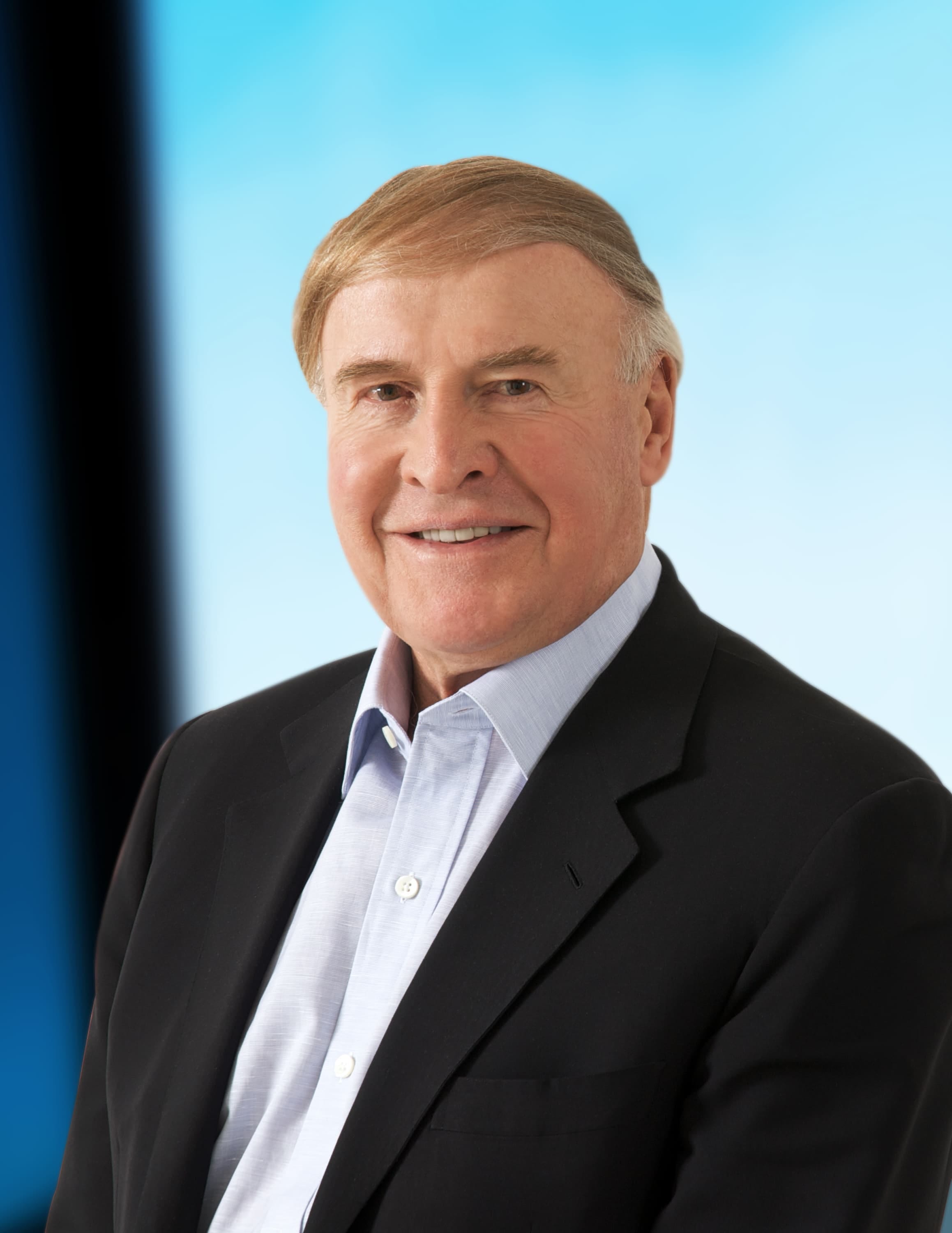
Kramlich’s legacy is not just the companies he helped build but the lesson that innovation requires bold investors willing to fund the impossible, and stick with the companies backed throughout the challenging journey.
The reason I decided to write about him is that if we want to solve climate change, AI safety, biosecurity, space colonization, and the reinvention of human health, we don’t just need brilliant founders. We need investors who are willing to fund civilization-scale moonshots, and do so before they’re obvious.
We need more Richard Kramlichs today.
When people talk about innovation, they usually talk about founders, labs, and breakthrough discoveries. But there’s also the necessary capital to fuel the transition from research to reality. Without early-stage investors, many of today’s most important technologies wouldn’t exist.
→ OpenAI wouldn’t have made it without early investors who took the risk when AI was still considered science fiction (albeit that they started as a non-profit organization).
→ SpaceX almost collapsed in 2008 until investors doubled down on a future of reusable rockets.
→ CRISPR and synthetic biology would still be stuck in academic labs if not for biotech investors willing to fund the commercialization of gene editing.
The reality is that many of the most critical innovations don’t fit traditional investment models.
🔻 They take decades to commercialize.
🔻 They require billions in upfront capital.
🔻 They often fail before they succeed.
But when they work, they don’t just disrupt industries. They change the course of history.
One of the biggest challenges facing deep-tech and existential innovation is the short-term nature of venture capital: Most VC funds operate on a 10-year cycle (with life sciences as an exception), with big bets sometime needing need 20+ years to succeed. This mismatch means that many transformative opportunities in AI, energy, and biotech aren’t necessarily getting the funding they need.
Let’s consider these timelines:
AI took 50+ years to reach real-world impact. Investors in OpenAI started writing checks 7 years before ChatGPT was launched.
Fusion energy has been “30 years away” for 70 years. But investors like Sam Altman and Bill Gates are now pouring billions into companies like Helion and Commonwealth Fusion because the breakthroughs are finally happening.
mRNA vaccine technology was in development for decades before it became the foundation for COVID vaccines.
Look, many investors are impatient, especially with the VC industry operating under immense scrutiny. If a company can’t show rapid returns, massive exits, or quick product-market fit, VCs might simply walk away.
That’s why we need a new model for funding existential innovation—one that prioritizes long-term, high-risk, civilization-scale bets over short-term gains.
Fortunately, there are investors who still have the courage to bet big - are are a few that’s worth mentioning for helping to fuel a transformative future.
Sam Altman (Helion, OpenAI): Betting on AGI and fusion energy.
Steve Jurvetson (Future Ventures, SpaceX, Tesla): Backing deep-space colonization, AI, and quantum computing.
Bryan Johnson (Kernel, Blueprint): Investing in human longevity, AI, and neural interfaces.
Peter Thiel (Founders Fund, Palantir): Funding hard-tech breakthroughs in AI, national security, and biotech.
We need more of them.
If we’re serious about funding existential innovation, we need to put capital into the right , transformative problems.
1/ AI & Quantum Computing
The AI arms race will define the next century.
Quantum computing could break encryption, revolutionize drug discovery, and redefine intelligence itself.
Whoever owns these technologies owns the future.
2/ Fusion & Clean Energy
Fossil-fuel subsidies worldwide surged to a record $7 trillion in 2022 alone.
Imagine if that capital had been directed at fusion energy instead.
Companies like Helion, Zap Energy, and Commonwealth Fusion are on the brink of commercializing nuclear fusion.
If we solve energy, we solve everything.
3/ Biotech & Human Longevity
AI-driven drug discovery is moving faster than regulatory agencies can track.
Longevity research is showing that aging can be slowed—maybe even reversed.
Biosecurity is now as important as cybersecurity.
The future of health will be programmable.
4/ Space Colonization & Industrialization
The space economy could be worth $1.8 trillion by the 2035.
Mars is still a long shot—but humanity will need a Plan B.
The first trillionaire might be made in space.
Richard Kramlich saw what others didn’t.
He bet on Apple when it was just a scrappy startup.
He backed Juniper when the internet was still young.
He understood that capital drives technological revolutions.
We need more investors like Kramlich…
To fund AI safety before it’s too late.
To bet on next-gen biosecurity before the next pandemic.
To push fusion past the finish line.
We always need brilliant, visionary founders.
But we also need bold investors who refuse to accept the status quo.
The future (also) belongs to those willing to fund it.
Thanks for reading,
Yon
Connect with me on Linkedin and X.
AI assistants were used to help research and edit this essay.